


FOR BANDS & ARTISTS

Band and artist merch stores that hold up on drop day.

A merch store sits quiet for weeks, then every fan arrives in the same minute. We build stores and checkouts that hold on drop day, and sell around each tour stop, so fans who miss the merch table still buy. Tuff Crowd's launch took 600+ orders in its first hour on a checkout we stress-tested.

30-minute call with Dair
The founder, not a sales rep.
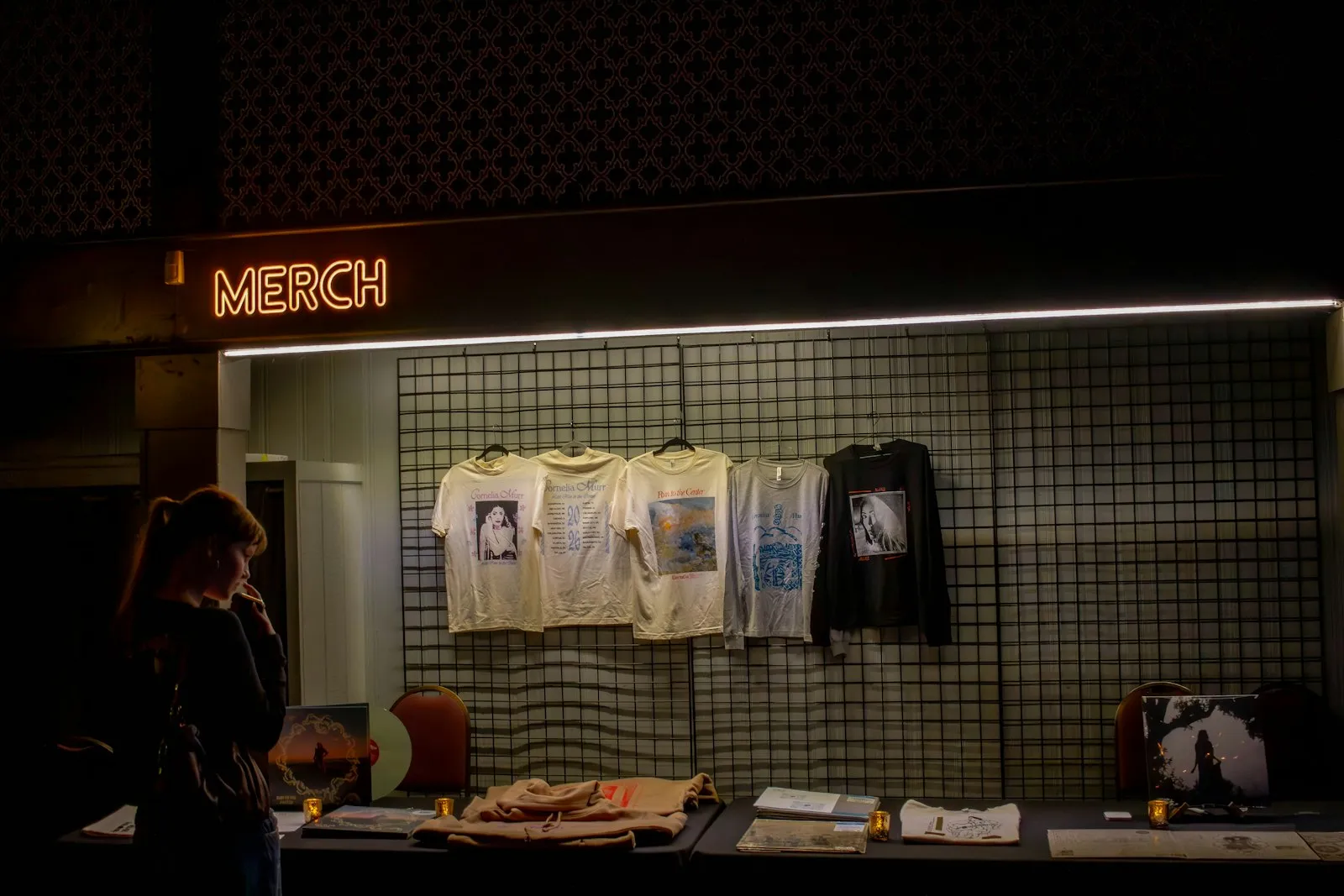
A fan browsing shirts at a band merch stand
BRANDS WE'VE WORKED WITH
  • Rüfüs Du Sol
  • Tuff Crowd
  • Haven Sleep Co
  • Amourprints
  • Soul Comfort
  • Boss Dog & Boss Cat

Including the band Rüfüs Du Sol, and Tuff Crowd, whose launch took 600+ orders in its first hour. Read our reviews on Shopify (opens in a new tab).

IN SHORT

Band merch marketing is how a band or artist sells tees, hoodies, vinyl and limited runs online, in bursts around drops, releases and tours.

HOW PEOPLE BUY
All at once. Fans rush in the minute a drop goes live, when a tour is announced, around each show, and after it if their size sold out at the merch table.
WHEN IT SELLS
Around releases and tours: the announcement, the show dates and the days after. Black Friday in late November and the holidays bring gift orders, and restocks and anniversary editions fill the quiet months.
WHAT WINS THE SALE
A store that stays fast under the rush, stock tracked size by size, drop alerts to the fan list, and ads made from the band's own tour content.
WHY BAND MERCH IS DIFFERENT

Your fans all show up in the same minute.

A merch store can sit quiet for weeks and then get slammed as soon as a drop goes live. Here's what we plan for.

Not sure where your store loses sales? Ask Dair →

Drop-day traffic

When the band posts the link, a wave of fans hits the store at once. Slow pages, failed payments or oversold sizes turn a big day into refunds and angry replies.

HOW WE FIX IT A store and checkout tested for the rush

Demand follows the tour

Fans buy when a tour is announced, before the show, and after it if their size sold out at the merch table. Ads that ignore the tour dates miss all three moments.

HOW WE FIX IT Ads timed to every tour stop

US fans who get a bill at the door

Since August 29, 2025, parcels into the US no longer enter duty-free, however little they're worth. A US fan ordering from an overseas artist's store can be asked to pay at the door, and a refused parcel costs you shipping both ways.

HOW WE FIX IT Duties paid at checkout, or a US warehouse

Flat product shots

A shirt on a white background could be anyone's. Fans buy the design story, the band wearing it and the night it's tied to.

HOW WE FIX IT Ads made from tour and band content
INSIDE THE WORK

How merch sells: drops, tours and the fan list.

Three things decide how much a band's merch store makes: whether it holds up on drop day, whether the ads follow the tour, and how many fans you can reach without waiting on the algorithm.

DROP DAY

The store has to hold when every fan arrives at once.

A merch store can sit quiet for weeks, then get slammed the minute a drop goes live. That's when slow pages, failed payments and oversold sizes turn a big day into refunds and angry replies. Oversold sizes are the quiet problem: in Shopify, a size set to 'Continue selling when out of stock' keeps taking orders after the last shirt is gone, and you only find out after the drop.

So before every big drop, we test the store and checkout under heavy traffic, take out apps that slow the checkout, and check stock size by size, with that setting off unless the item is a pre-order. The waitlist email and texts are scheduled for the moment it goes live. It's how we ran the launch for Tuff Crowd, a streetwear label, which took 600+ orders in its first hour. Read the Tuff Crowd case study.

  • Store and checkout tested under heavy traffic before every big drop
  • Apps that slow checkout taken out
  • Stock tracked size by size, so nothing oversells
An example of the checks before a big drop, with one size that would have oversold caught in time.
TOUR DATES

Every tour stop gives fans three times to buy.

Fans buy merch at three moments on a tour: when it's announced, in the days before their show, and after it, when their size sold out at the table or they couldn't make it. The table is also the most expensive place to sell. Venues commonly take 15% to 35% of merch sales, according to figures from the United Musicians and Allied Workers union reported by KQED, and sales through your own store don't pay that cut.

So the plan follows the tour dates. Sales open with the announcement, often with a pre-order tour tee and an honest ship date. In each city, ads reach fans near the venue in the days before the show and the days after it. Tour-only designs go online for fans who can't make it, and limited editions close when the stock or the time window runs out. More in Facebook and Instagram ads.

  • Sales open the day the tour is announced
  • Ads to fans near each venue, before and after the show
  • Tour-only designs online, with no venue cut
An example tour plan for one city: what goes out when the tour is announced, in show week and after the show.
THE FAN LIST

A list you own reaches every fan who signed up.

Social posts reach only part of your following, and a limited drop can sell out before most fans see it. Email and SMS go to everyone who signed up, the second the drop goes live. That's why every drop starts with a waitlist: a sign-up page that collects emails, and phone numbers from fans who want texts, before launch day.

Each drop then runs as a short sequence. Fans on the waitlist get the date, the time and what's in the drop. When it goes live, the link goes out by email, and by text to fans who opted in to texts. Anyone who hasn't ordered by the next day hears which sizes are left, and the sequence stops as soon as they buy. Between tours, the same list hears about restocks, anniversary editions and holiday gifts. More in email and SMS.

  • A waitlist page before every drop
  • Drop alerts by email, and by text to fans who opted in
  • Restocks and holiday gifts sent to the list between tours
An example drop alert sequence: fans join the waitlist, hear the moment the drop goes live, and stop hearing about it once they order.
WHAT'S INCLUDED

Ready for the drop and the months after.

We cover everything from the waitlist before a drop to the restock after the last show.

  1. Drop-day readiness

    Store and checkout tested under heavy traffic before every big drop. Slow apps come out and stock is checked size by size.

  2. Waitlists before every drop

    A sign-up page that collects emails and phone numbers before launch. Fans hear the second the drop goes live.

  3. Merch on your Spotify profile

    Your Shopify store connected to Spotify for Artists, so your latest tee or record shows on your artist profile, where fans already listen.

  4. Pre-orders and limited runs

    Pre-order pages with honest ship dates. Limited editions close when the stock or the time window runs out.

  5. Bundles fans want

    Vinyl and tee bundles, signed items and tour-only designs that raise the value of each order.

  6. Sales between tours

    Restocks, anniversary editions and holiday gift ideas sent to your list. The store keeps earning in the quiet months.

CLIENT RESULTS

Results from our clients.

All case studies →
WHAT WE DO

Built for drops, tours and fans.

Start with the store, the ads or the fan list. We plan them around the same calendar of drops and shows.

FREE TOOLS

Run the numbers before the drop.

Set a budget for launch ads, see what abandoned carts cost you on drop day, and work out what a fan who buys every tour is worth.

FAQ

Questions about band and artist merch.

Don't see your question? Ask Dair directly on the call.

Dair Rose
Still have a question?
Email or call. Dair replies personally.
Book a strategy call →

Test the store and checkout under heavy traffic before the drop, remove apps that slow checkout, and check that stock is tracked for every size. Tuff Crowd, a streetwear label, took 600+ orders in the first hour of a launch on a checkout we stress-tested.

Open sales when the tour is announced, run ads to fans near each show, and sell tour-only designs online for fans who can't make it. After each show, remind local fans that sizes gone from the merch table can still be ordered online.

Yes. Social posts reach only part of your following, and a limited drop can sell out before most fans see it. A list you own lets you reach every fan who signed up the moment a drop goes live.

Yes, with a plan for the quiet months. Restocks, anniversary editions of an album, holiday gift ideas and new designs give fans reasons to buy. Email and SMS let you tell them directly.

Start from what each order keeps after production, shipping and fees, and set the most a sale can cost from that. Your list and your socials reach existing fans for free. Ads earn their budget by finding fans in tour cities and bringing back visitors who didn't buy.

Yes, if the duty is paid before the parcel ships. Since August 29, 2025, parcels into the US no longer enter duty-free, so either charge duties at checkout or ship US orders from a US warehouse. Before a US tour, a warehouse also means one bulk import instead of one per order, and faster delivery to fans.

If your store is on Shopify, it's worth connecting. Spotify for Artists links to your Shopify store and shows your merch on your artist profile, where fans already listen. Feature the items tied to your latest release or tour, and swap them when the next one comes.

Got a drop or a tour coming up?

Before the big day, take 30 minutes with Dair. He'll find what could go wrong and how to fix it.